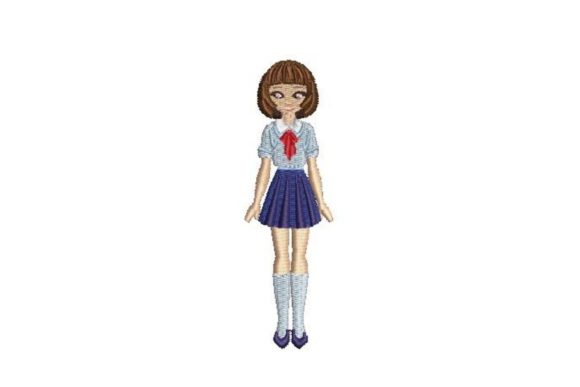
Japanese School Girl: A Designer’s Embroidery Review
As an embroidery product reviewer and designer, I approach every new digitization with a critical eye. It is not enough for a design to look appealing on a screen; it must perform under the needle and add genuine value to the finished product. When evaluating the Japanese School Girl machine embroidery design, my immediate focus is on its versatility within the Back To School category and its technical execution for real-world application. This design captures a classic, cute aesthetic featuring a schoolgirl in a traditional Japanese-style uniform. While the visual charm is evident, the true test lies in how this embroidery file translates to fabric, stabilizer, and ultimately, a saleable or giftable item.
First Impressions and Visual Personality
Upon loading the digital embroidery file into my software, the layout of Japanese School Girl feels balanced and intentional. The silhouette is distinct, which is crucial for recognition when stitched out at smaller sizes. The mood is undeniably nostalgic yet fresh, striking a chord that appeals to both younger audiences and adults who appreciate anime-inspired or kawaii aesthetics. For an Etsy seller or small shop owner, this specific visual personality is a strong asset. It avoids being overly generic, allowing it to stand out in a crowded marketplace of standard school-themed graphics.
The digitizing style appears to prioritize clean lines over excessive complexity. This is a positive indicator for stitch clarity. In my experience, designs that rely too heavily on dense fill stitch areas can become stiff and unappealing on apparel. This design seems to respect the drape of the fabric, suggesting it will work well as a centerpiece for custom apparel or as a charming accent on accessories. The inclusion of multiple embroidery files in the package is a significant practical advantage, allowing makers to select the appropriate format for their specific machine without needing third-party conversion tools that might corrupt stitch data.
Real-World Application: Stitching a Tote Bag
To truly evaluate this design, I mentally walked through a recent client project: creating personalized tote bags for a local language school’s orientation. Canvas tote bags are a staple handmade product, but they present unique challenges due to fabric texture and weight. Japanese School Girl is ideally suited for this application. The uniform’s structured lines complement the sturdy nature of canvas, whereas a more fluid or watercolor-style design might get lost in the weave.
When stitching this out on a 12oz cotton canvas, I would pair it with a medium-weight cutaway stabilizer to prevent puckering around the satin stitch elements likely found in the uniform details. The design’s scale allows it to be centered effectively on a standard tote bag panel without overwhelming the functional space of the bag. For a craft business, this specific use case demonstrates high commercial viability. Parents love personalized gifts for their children’s educational milestones, and this design bridges the gap between cultural appreciation and practical school gear. It transforms a basic utility item into a cherished keepsake.
Technical Performance Across Different Substrates
Versatility is key for any embroidery project intended for commercial use. While Japanese School Girl shines on stable fabrics like canvas or denim, its performance varies across other materials common in the Back To School niche.
- Sweatshirt Embroidery: Fleece and french terry are popular for school spirit wear. However, the pile of these fabrics can swallow fine details. If using this design on a sweatshirt, I recommend using a water-soluble topping to keep the running stitch outlines crisp. The design’s bold shapes should hold up well, provided the stitch density is adequate to cover the fabric texture without causing bulletproofing.
- Baby Embroidery and Kids' Apparel: When downsizing for baby clothes or toddler jackets, caution is necessary. Reducing a design too much can cause satin stitches to become too narrow, leading to thread breaks or a loss of definition. Always check the minimum recommended size for this specific embroidery file. If the details of the Japanese uniform become muddy at smaller hoop sizes, consider using it only on larger garments or opting for a simplified version if available.
- Patches and Caps: The distinct outline makes this a strong candidate for an embroidered patch. Patches require high stitch density and a merrowed edge, so ensure the design has sufficient border integrity. For caps, the curved surface demands a design that isn't too tall vertically. Test the aspect ratio before committing to headwear production to avoid distortion.
Navigating Fabric Limitations and Stabilization
No matter how beautiful the artwork, physics dictates the outcome. When working with Japanese School Girl, be mindful of stretchy knits and dark fabrics. On performance polyester or thin jersey, the contrast between the dense stitch areas and the lightweight fabric can cause tunneling. A fusible no-show mesh stabilizer is often superior to tear-away options for these garments, providing permanent support that moves with the fabric during washing.
For dark fabrics, thread color contrast becomes paramount. The classic Japanese uniform often features navy, white, and red. If stitching on a navy sweatshirt, the navy portions of the uniform may disappear unless you use a lighter shade or add an outline. This is where testing on scrap fabric is non-negotiable. As a professional, I never assume screen colors match thread reality. Create a physical color chart or stitch-out sample to verify that the visual hierarchy remains intact on your chosen background. This attention to detail separates amateur hobbyists from trusted apparel decorators.
Commercial Viability for Makers and Sellers
For those running a craft business or selling on platforms like Etsy, Japanese School Girl offers excellent potential for brand consistency. Its specific aesthetic allows you to build a cohesive collection of Back To School items—from pencil cases to pillow covers—that feel curated rather than random. Buyers engage more deeply with shops that have a recognizable style, and this design anchors that identity effectively.
However, professionalism extends beyond aesthetics. Before listing any finished product or digital asset derived from this design, you must confirm the licensing terms. Verify whether the license permits commercial embroidery of physical goods versus the resale of the digital embroidery file itself. These are distinctly different rights. Additionally, when creating printable mockups for your listings, ensure the digital representation accurately reflects the stitch texture. Misleading customers with flat vector art when the actual product is textured embroidery leads to returns and negative reviews. Use realistic 3D mockups or, better yet, photographs of actual test stitch-outs to build buyer trust.
Essential Pre-Stitch Checklist for Success
To ensure Japanese School Girl performs flawlessly in your studio, adhere to this practical workflow:
- Verify Hoop Size Compatibility: Before purchasing or stitching, confirm the design dimensions fit your machine’s maximum embroidery area. Do not rely solely on software resizing, as extreme scaling alters stitch density and coverage.
- Test Stitch Density: Run a test on the exact fabric you intend to use. Check the back of the embroidery; excessive bobbin thread showing on top indicates tension issues or density problems specific to that material.
- Evaluate Small Details: Inspect facial features and uniform buttons at the intended print size. If details are smaller than 1mm, they may not stitch cleanly. Adjust or simplify if necessary.
- Check Thread Colors: Map out your thread palette against the fabric. Ensure there is sufficient contrast for the design to be legible from a distance.
- Confirm Washability: If making items for kids or daily use, wash the test sample. Observe if the stabilizer dissolves completely and if the design distorts after laundering.
Japanese School Girl is a delightful addition to any embroiderer's library, particularly for those targeting the youth and education market. By treating it as a technical component of a larger manufacturing process rather than just a pretty picture, you elevate the quality of your handmade products. Whether you are crafting a personalized gift for a student or building inventory for a boutique, success comes from respecting the interplay between digitization, material, and machine. Take the time to test, stabilize correctly, and verify your commercial rights, and this design will serve as a reliable staple in your creative repertoire.